How to Maximize Student Engagement in the Classroom

The Importance of Understanding Students
Building strong teacher-student relationships and tailoring instruction to individual learning styles are essential for student success.
William Powell's book How to Teach Now suggests that it is absolutely necessary to know who our students are in order to teach them successfully, or rather, for them to learn successfully. As simple as it may be to dismiss how important it is to truly know our students, it is becoming more evident that students today may not engage with us or the knowledge we wish to share if they are not connected to us as educators in some way or until we learn to adjust to each student’s personal story as well as the manner in which they learn.
Powell stated that knowing our students means more than learning about their demographics or their likes and dislikes. We need to do more than what teachers of old did to gather student information. We need to gather and analyze data to learn about our students, who they are as individuals, their learning circumstances, and their learning styles.
According to Pashler, McDaniel, Rohrer, and Bjork in their article Learning Styles: Concepts and Evidence:
The term learning styles refers to the view that different people learn information in different ways. In recent decades, the concept of learning styles has steadily gained influence… We describe the interest and discussion that the concept of learning styles has elicited among professional educators at all levels of the educational system. Moreover, the learning-styles concept appears to have wide acceptance not only among educators but also among parents and the general public. This acceptance is perhaps unsurprising because vendors actively promote the learning-styles idea through many different tests, assessment tools, and online technologies that help educators identify students' learning styles and adapt their instructional approaches accordingly.
Catering to Auditory Learners

Auditory learners thrive on information delivered through spoken language and sound.
Educators have seen a major shift toward teaching different learning styles, teaching the whole child, and/or differentiating instruction to support each student. Each lesson should engage every student, regardless of their learning preferences. The four main types of learning styles are Visual Learners, Auditory Learners, Kinesthetic Learners, and Tactile Learners.
Auditory learners appreciate and retain more information through listening. Therefore, their learning will be activated through music, sound, and someone’s voice. These students especially like music class or any lesson that involves singing or listening to music. Teachers of all content areas should consider how to include engaging sound and music in their lessons. Some tools to facilitate learning for your auditory students include modulating your voice while speaking or reading a story–use interesting and engaging tones, encourage students to re-read what they have written to themselves, an elbow buddy, or the class as a whole group; the teacher should repeat/read notes written in text (on the board, textbooks, on the computer, etc.). In the age of technology, it is becoming increasingly easier to engage auditory listeners.
Teachers can record lessons for students to listen to later and to use as a reference. Teachers may use online tools such as Pear Deck, NearPod, Flip Grid, or Loom to have students listen to another voice during an activity, or even to sounds that motivate students while they work independently on a task.
Strategies and Tools for Visual Learners
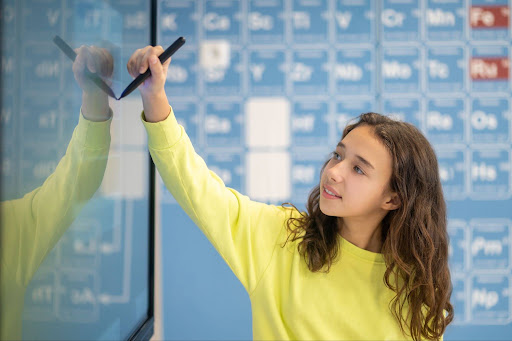
Visual learners benefit from instruction that incorporates visual elements and representations.
For instance, visual learners like drawing and creating charts and diagrams. They learn by seeing and creating, or by watching others do the same. They also tend to be observant and prefer instruction to have pictures or something they can see. Teachers should use vibrant colors and shapes to engage visual learners. Teachers should also model expectations and provide examples for these students. While all students benefit from lessons with lots to see, visual learners are more stimulated and tend to remember what they learn when they can visualize the concepts.
The use of technology supports this type of learning as there is a plethora of resources that can be used – websites and programs alike that are visually stimulating. Students can view maps, diagrams, and various imagery. Teachers can also use smartboards to project lessons and bring them to life. In Social Studies and Geography, videos and maps will create memorable lessons. In Math, seeing pictures that represent math problems helps clarify what is happening. Again, charts, images, and diagrams can benefit every student, so providing visuals also benefits the whole class. Teachers should consider placing visual learners near the front of the room since they need to see to learn; color coding and note-taking will help as well.
Kinesthetic Learners and the Power of Movement
Kinesthetic learners benefit from hands-on experiences and active learning strategies.
Often called hands-on learners, kinesthetic or tactile learners want to physically engage with materials in any subject. It was once said that students learn by doing, and this statement best represents this group of students. These students tend to like feeling different textures; they like to move and, conversely, may not prefer reading or writing as much as auditory or visual learners. As you can imagine, the younger the student, the more they prefer to move and play. When working with Kindergarteners, it is imperative that I include movement in every subject area. I have even conducted short studies on students who have difficulty retaining subject matter, for example, letter-sound recognition or vocabulary words.
Studies, including my own, show that when movement is incorporated into a lesson, students who have difficulty retaining letter-sound correspondence remember more when motion is used. This solidifies how important action and movement are in the learning process. Teachers can channel students' energy physically. This can take the form of simply allowing shake breaks throughout the day so that students can rest their brains and move their bodies. These students will also benefit from props and models. Having students engage in drama, where they experience their learning, is also beneficial. I have used skits and plays to help students retain information that otherwise could be daunting.
Diverse Learning Styles: The Holistic Approach
By incorporating a variety of teaching strategies and creating engaging learning experiences, educators can empower all students to succeed.
In his book Experiential Learning: Experience As the Source of Learning and Development, David Kolb goes even deeper in identifying learning styles. He suggests that people learn in the following ways: Diverging (feeling and watching - CE/RO), Assimilating (watching and thinking - AC/RO), Converging (doing and thinking - AC/AE), Accommodating (doing and feeling - CE/AE). These seem to be more detailed classifications of the Visual, Auditory, Kinesthetic, and Tactile groups that we are more familiar with.
Dave Burgess, the author of Teach Like a Pirate, writes, "Provide an uncommon experience for your students, and they will reward you with an uncommon effort and attitude."
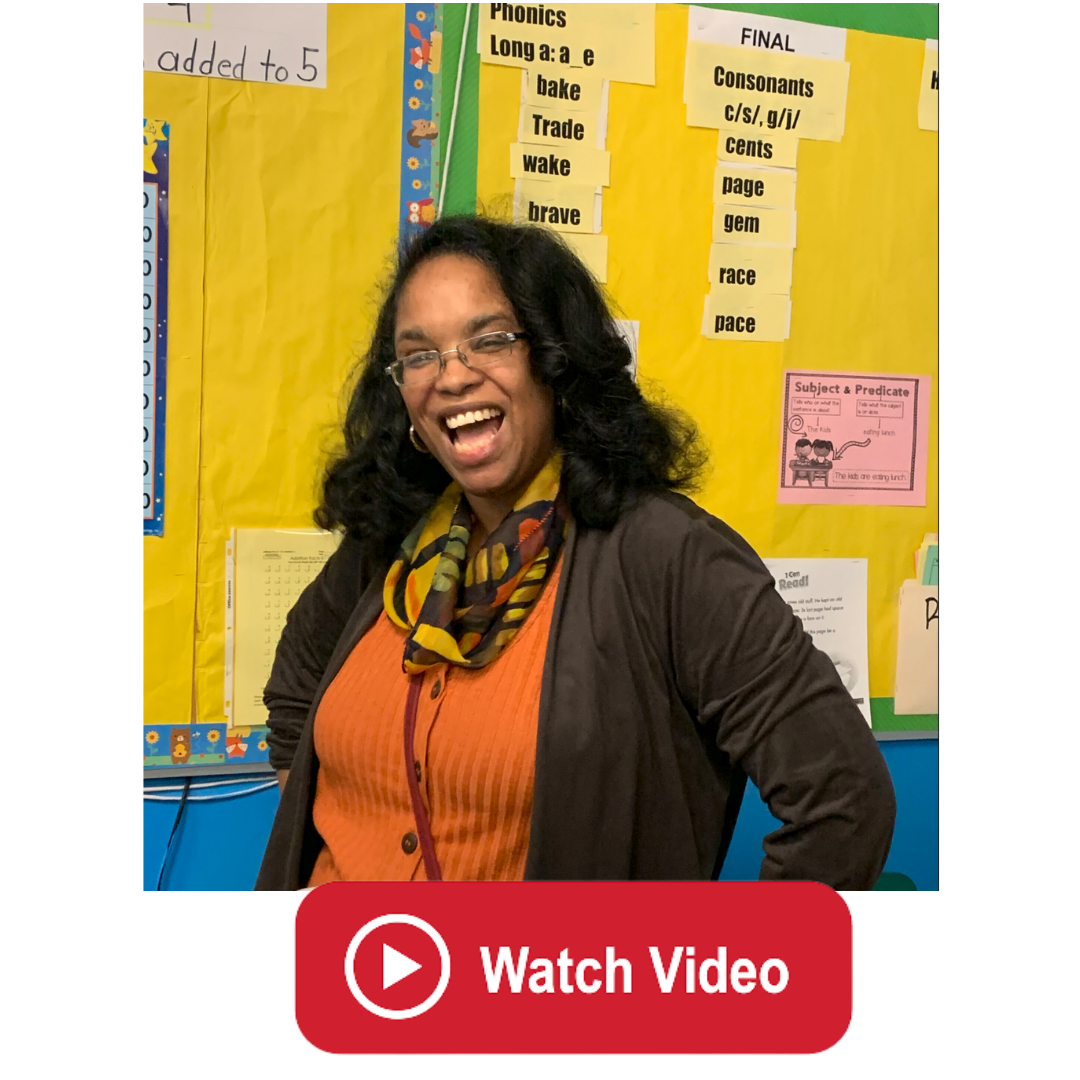
As a kindergarten teacher, I keep this in mind as I develop and implement lessons. For example, I try to consider my students' varying learning styles. Sometimes, I attempt to create a different experience by changing the classroom into a newspaper from the early 1900s.
In this lesson, my students actively reviewed skills taught at the beginning of the year. All the skills in this lesson were aligned with our reading, math, and Social Studies curriculum. These concepts included beginning sounds, uppercase-to-lowercase matching, writing sentences, and number identification using mathematical concepts like tally marks, base ten blocks, fingers, and ten frames. We also had history lessons on activists like Ida B. Wells, a journalist.
It is important to plan activities that benefit all types of learners. During our day of “working" at the newspaper, for instance, students were able to freely move around the room from activity to activity while using various colors and songs to complete a series of reading and mathematics activities. During this time, students could work at their own pace. It also gave me the opportunity to provide one-on-one support to meet their learning needs. While some students wrote words in the sand, others built words with Play-Doh or listened to songs that taught letter-sound correspondence. All students remained engaged because the
If you’re considering following your dream of teaching, Rutgers Alternate Route can offer you the support and training you need to succeed. Be sure to follow Rutgers Alternate Route on Twitter and sign up for Alternate Route’s monthly newsletter for more information and stories from the field of education.