Finding Her Footing: A Mid-Year Check-In with Teacher Mariesa Herrmann
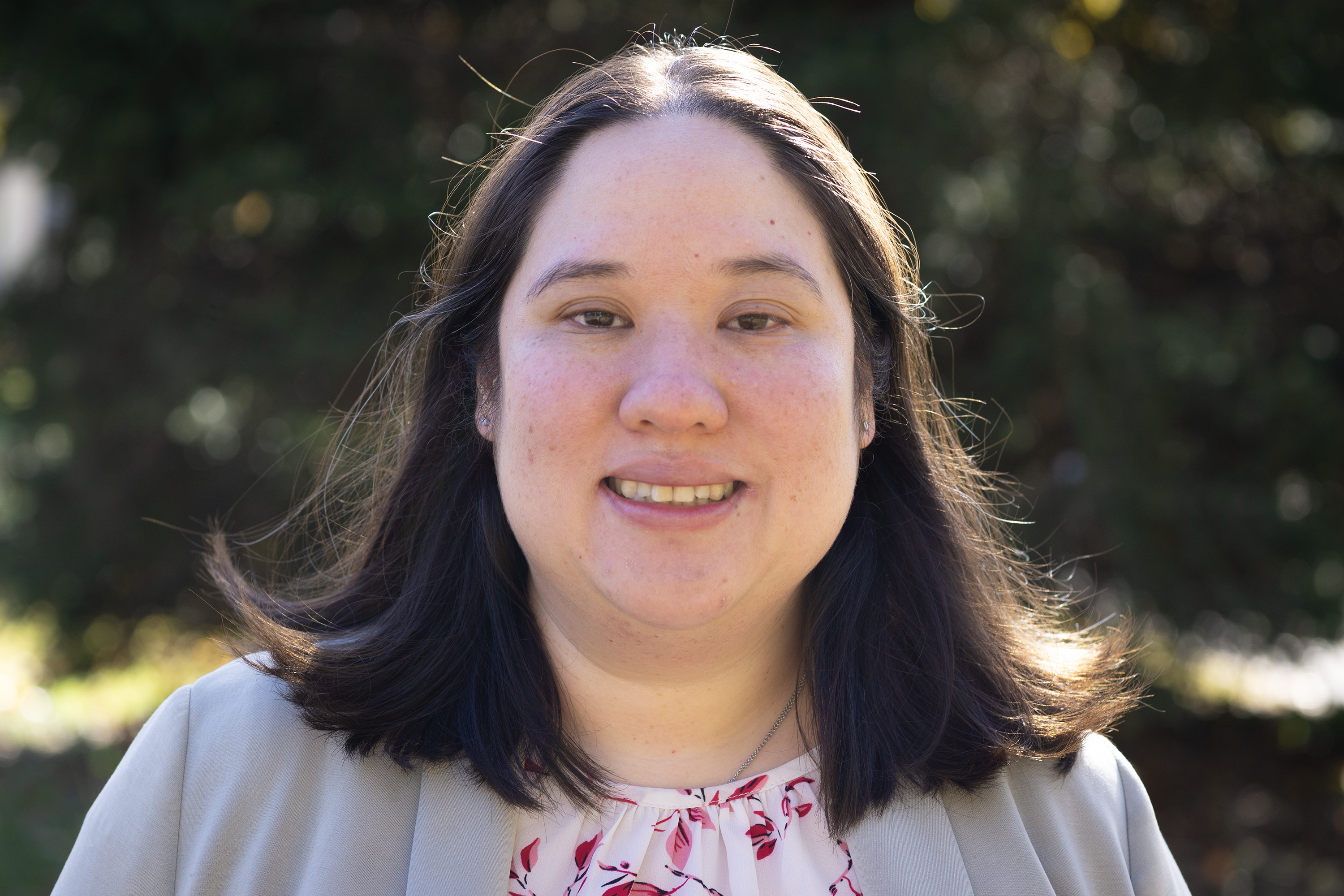
First-year teacher Mariesa Herrmann likes to refer to her professional growth strategy as ‘building the plane while flying it.’ Like all new teachers, Herrmann understands that many teaching skills are developed by doing.
“There are so many things that you're trying to figure out along the way,” she said. “You can't really know until you experience them—you just need time.”
Herrmann compares this strategy to how she navigated her responsibilities in prior corporate environments, saying a big part of the job is accepting “what’s good enough, versus making things perfect.”
“No course can teach you everything you need to know,” she said. “You have to practice teaching the same way students have to practice math. That’s how you get better.”
With multiple learning gaps to fill as a first-year teacher, Herrmann kept coming back to what matters by identifying a North Star:
“What are the things that I'm doing that are helping the kids learn?”
During the times she feels overwhelmed, Herrmann can always measure her priorities by choosing the ones that serve her students most.
When Rutgers Alternate Route interviewed Herrmann late last year, she had just received her teaching certificate, completed her preservice training and accepted a job teaching math. We recently caught up with her to check in on how she’s developed as an educator over her first semester.
Flattening the learning curve
Beyond mastering content, Herrmann also had to learn her students’ backgrounds, existing math knowledge, interests, motivations and goals.
“I didn’t know the students before I came in,” Herrmann said. “So I was learning what they care about, what motivates them, and what they want to do with their lives. That’s essential if you want to teach in a way that’s engaging and meaningful.”
Simultaneously, she was navigating the operational side of teaching—attendance systems, grading platforms, Google Classroom and district curriculum.
“That’s the challenge, right? You need time, but there's only a small amount of time,” Herrmann said. “You've got to teach the students every day. So, every day you've got to show up and come back, even though you're still trying to learn a lot while you’re doing it.”
These are the times when Herrmann comes back to her North Star, and centers her students and their interests.
“Students have their own backgrounds, and teachers are trying to understand how we can work with that and also come in with our own backgrounds.”
She tackled this challenge on the first day of class, asking students to complete a short survey about their interests. She also used the universal language of food to quickly connect with students, creating an activity centered on favorite snacks. The exercise quickly revealed common ground among the students, and Herrmann used their answers to inform rewards. There were many days she showed up to class with snacks in hand.
“There’s a lot of learning about the students so I can try to teach in a way that will be engaging for them, that sort of leverages their background knowledge.”
Beyond activities, relationship-building happened in quieter moments like talking with students before the bell rang, asking about weekend plans and learning about their dreams after high school.
“That kind of trust takes time, but it matters.”
Leaning on her Rutgers Alternate Route teachings
One area Herrmann could fall back on during the first semester was her Alternate Route training. The coursework helped her learn how to design standards-aligned lessons, think through assessments and incorporate engaging instructional strategies.
During her training, Herrmann developed a stomp rocket activity to solve quadratic equations and used it in her class.
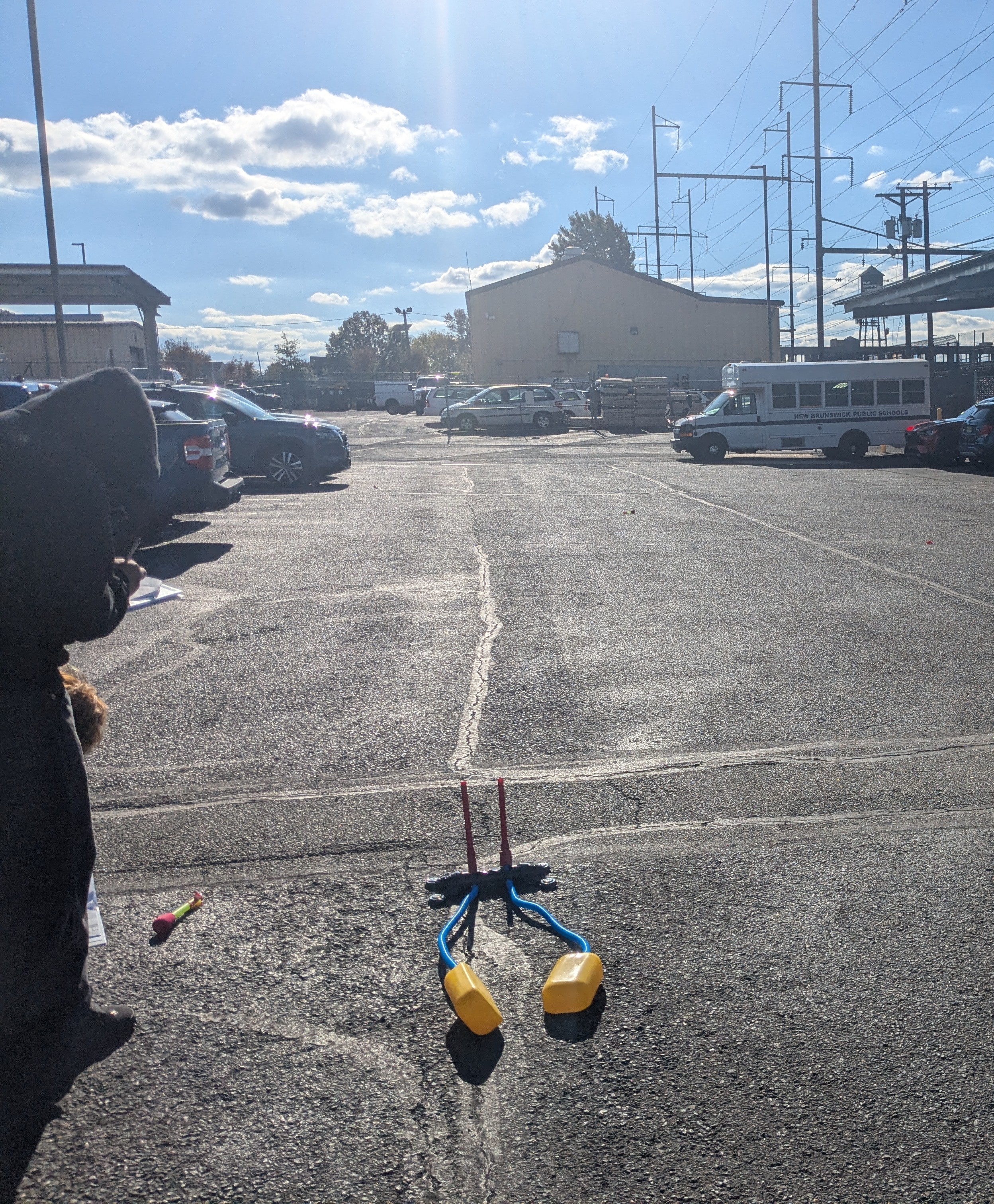
“We went out in the parking lot and the students shot off the stomp rockets. Then, we tried to measure how far the rockets went and what angle were we shooting them at and measure how long it took for them to hit the ground,” she said. “That was a ton of fun.”
The next day in class, Herrmann had the students draw a graph of the rocket’s trajectory and connect the activity to her quadratic equation lesson. The stomp rocket activity can also be utilized outside math classrooms, thanks to the Rutgers Alternate Route assignment.
“We were asked to write a lesson that was interdisciplinary. And so there is some physics behind why a stock rocket works the way that it does.”
Her training also gives Herrmann a pad to launch other engaging lessons. She used her creative mind to turn a lesson on multiplying binomials into an escape room, where students solved puzzles to “unlock” the next challenge.
“They were more keen on doing that than they would have been if I had put those exact same problems just on a worksheet,” she said.
Herrmann also used resources from home, like borrowing her daughters’ Barbies for her “Barbie Bungee Jump” lesson. In this activity, students become familiar with linear equations by measuring how far a Barbie doll fell based on the number of rubber bands used for the bungee. Students collected data, created equations, made predictions and then tested them by dropping Barbie from a staircase.
“I think in the future I could have chunked it up a bit more to help them kind of accomplish all the different steps. But I thought it was a fun change of pace.”
As she prepares for her second semester, Herrmann is energized by the possibilities. Plans include more quadratic explorations, an egg-drop experiment that blends physics and math, and continued experimentation with games and projects that keep students engaged.
If you’re considering following your dream of teaching, Rutgers Alternate Route can offer you the support and training you need to succeed. Be sure to follow Rutgers Alternate Route on Twitter and sign up for Alternate Route’s monthly newsletter for more information and stories from the field of education.
 Heather Ngoma has over 25 years of experience collaborating with educators across New Jersey to drive education innovation. She currently serves as the Director of the Rutgers-GSE Alternate Route Program in the Department of Learning and Teaching, a program which helps career changers, recent college graduates, and other aspiring education professionals become licensed teachers in New Jersey. Follow her on Twitter @heatherngoma.